


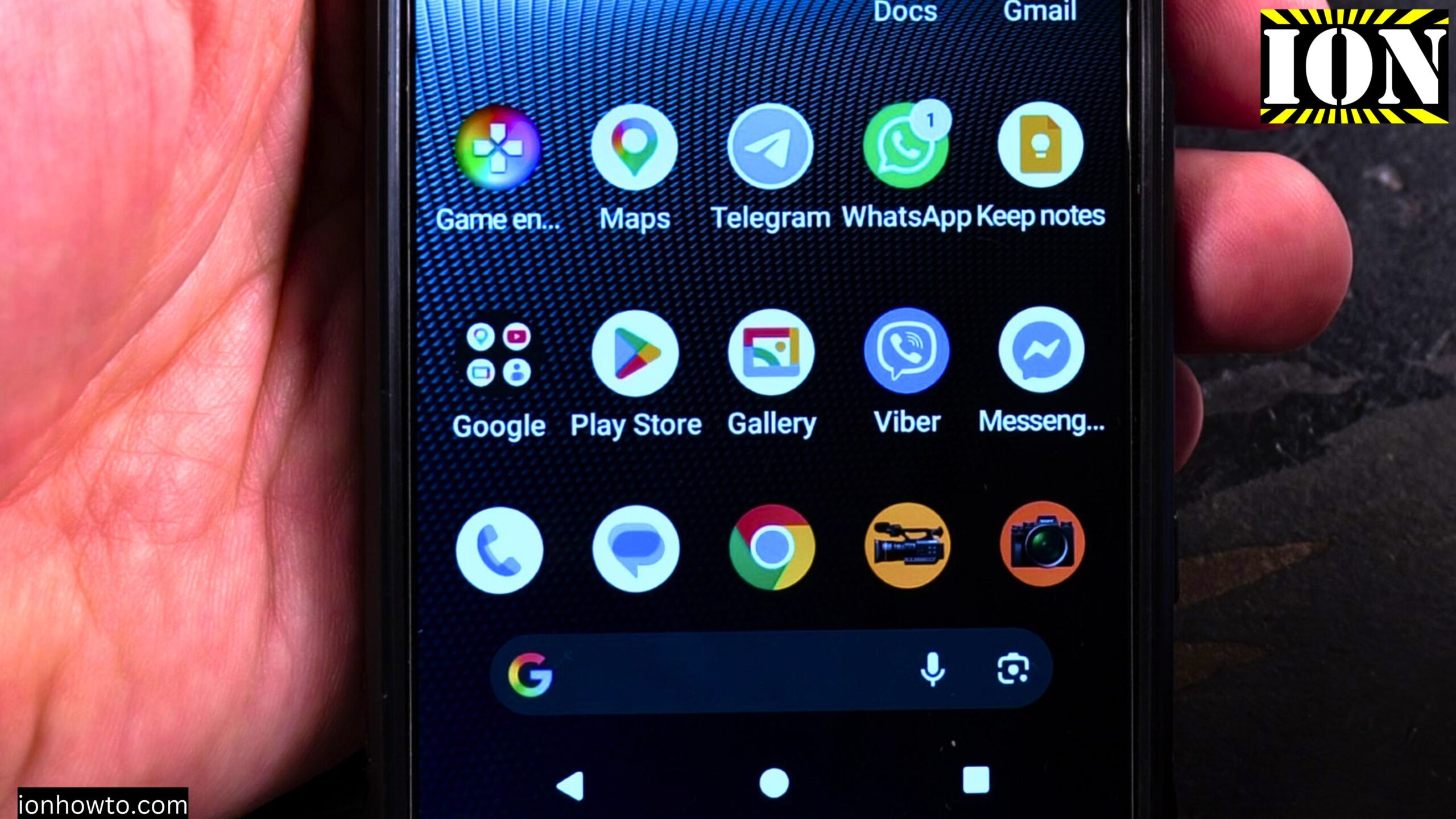
How to Disable Fast Charging on Android Devices.
Amazon links
As an Amazon Associate I earn from qualifying purchases:
- Phone Accessories
- Screen protectors
- Phone Cases
- Mobile Tripods
- Usb-c charger
- Usb-c cable
- Docking stations
- Wireless car chargers
- Wireless charger stand
- SIM card removal tool
- SIM card holder
Learn how to turn off fast charging on your Android phone. If you want your battery to last longer over the years or you live in a hot climate and want to keep your phone cooler while charging, slowing things down can help.
I’ll show you this on a Sony Xperia 1V running Android 15. But here’s an important thing to know upfront: most Android phones do NOT have a settings toggle to turn off fast charging. Instead, you control it by changing your charging cable, power adapter, or both.
Why would you want to disable fast charging?
Fast charging is convenient – you get 50% battery in 20-30 minutes. But it comes with trade-offs:
- More heat – Fast charging makes your phone warmer. Heat is bad for battery health over time.
- Battery degradation – Lithium-ion batteries slowly wear out. Charging slower can help preserve battery lifespan.
- Hot environments – If you live somewhere very hot, slow charging adds less extra heat.
- Overnight charging – You don’t need fast charging while you sleep. Slow charging is perfectly fine.
Does your phone have a fast charging toggle?

Most Android phones – including Samsung, Google Pixel, Sony, OnePlus, and Motorola – do NOT have a simple “”turn off fast charging”” switch in settings.
A few exceptions:
- Some Samsung phones – Settings > Battery > Charging > turn off Fast charging
- Some Chinese phones (Xiaomi, Oppo, OnePlus with ColorOS) – May have battery optimization settings that limit charging speed
For everyone else, you need a hardware solution.
Method 1: Use a different USB cable (easiest)
Not all USB cables support fast charging. Some cables are designed only for standard slow charging.
How to do it:
- Find an older USB cable – especially one that’s USB-A on one end and USB-C on the other
- Plug it into your charger and phone
- Check if your phone says “”Charging”” instead of “”Charging rapidly”” or “”Fast charging””
The cable matters. Many newer USB-C to USB-C cables support fast charging. Older USB-A to USB-C cables often don’t.
Where to find a slow cable:
- An old cable that came with a basic phone or accessory
- A cheap generic cable from a dollar store (these usually don’t support fast charging)
- A cable you’ve had for several years
Method 2: Use a slow power adapter
Your charging brick matters just as much as your cable.
How to do it:
- Find an older phone charger – like one from an old phone that didn’t have fast charging
- Look at the output label. A standard slow charger will say “”5V = 1A”” or “”5V = 2A””
- Plug it into the wall and connect your phone
A slow charger puts out 5-10 watts. A fast charger puts out 18-65 watts or more.
What to look for in a slow charger:
- Output: 5V at 1A (5 watts) or 5V at 2A (10 watts)
- No markings about “”Quick Charge”” or “”Power Delivery””
- Often comes with older phones, Bluetooth speakers, or small electronics
Method 3: Mix a fast charger with a slow cable
You can also combine a fast charger with a slow cable. The cable limits the speed even if the charger is capable of more.
Example:
- Fast charger (supports 25W) + slow cable = slow charging only
- Slow charger (5W) + fast cable = slow charging only
The weakest link determines your charging speed.
Method 4: Use a power bank with low output
Some power banks only output standard charging speeds. Look at the label on your power bank:
- Output 5V = 1A or 2A – This is standard speed
- Output with “”QC”” (Quick Charge) or “”PD”” (Power Delivery) – This supports fast charging
Use the power bank’s USB-A port if it has one. Those often charge slower than USB-C ports.
Method 5: Charge wirelessly (slower by default)
Wireless charging is typically slower than wired fast charging.
- Most wireless chargers deliver 5-15 watts
- Wired fast charging can be 25-65 watts
If your phone supports wireless charging, this is an easy way to slow things down without changing cables.
How to tell if your phone is fast charging or slow charging
When you plug in your phone, look at:
The lock screen message
- “”Charging rapidly”” or “”Fast charging”” = fast charging is active
- “”Charging”” or “”Slow charging”” = standard speed
The battery icon
- One lightning bolt = standard charging
- Two lightning bolts or a special icon = fast charging (on some phones like Xiaomi and Samsung)
Estimated time
- “”45 minutes until full”” with 20% battery = fast charging
- “”2+ hours until full”” = slow charging
Does slow charging really help battery health?
Yes, but the difference isn’t huge. Here’s what research shows:
- Heat is the main enemy – Fast charging generates more heat. Heat degrades batteries faster.
- Slower is gentler – Charging at 5-10 watts creates less stress than 25+ watts.
- Overnight charging – If you charge overnight anyway, using slow charging makes perfect sense.
However, modern phones and batteries are designed to handle fast charging. Using fast charging exclusively might reduce battery life by 5-10% over 2-3 years. For most people, the convenience is worth it.
What about charge limiting (charging to 80% or 90%)?
Some Android phones have a feature that limits the maximum charge to 80% or 90%. This actually helps battery health more than slow charging does.
On Sony phones (like the one in the video):
- Settings > Battery > Charging limit
- Choose automatic or set a custom limit (80% or 90%)
On Samsung phones:
- Settings > Battery > Protect battery
- Turns on a feature that limits charging to 85%
On Pixel phones:
- Adaptive charging learns your sleep schedule and charges slowly overnight
Combining slow charging WITH a charge limit gives you the best battery preservation.
What NOT to do
- Don’t buy expensive “”slow charging”” cables – Any basic, cheap cable will work
- Don’t root your phone – Some people claim custom ROMs can disable fast charging, but this is risky and unnecessary
- Don’t worry too much – Your phone’s battery will last 2-3 years with normal fast charging. Replacements are usually $50-100
Quick summary
To disable fast charging and use slow charging instead:
Method 1 (easiest): Use an old USB-A to USB-C cable instead of a USB-C to USB-C cable
Method 2: Use a standard 5-watt or 10-watt power adapter (5V = 1A or 5V = 2A)
Method 3: Use a power bank’s USB-A port instead of USB-C
Method 4: Charge wirelessly if your phone supports it
How to check: Plug in your phone and look at the lock screen. If it says “”Charging”” (not “”Charging rapidly”” or “”Fast charging””), you’ve succeeded.
But remember: Most phones don’t have a software toggle. You need to change your hardware – the cable or the charger. If you want to slow down charging at night, keep an old slow charger by your bed. Use fast charging during the day when you need a quick boost.
Leave a Reply Cancel reply