


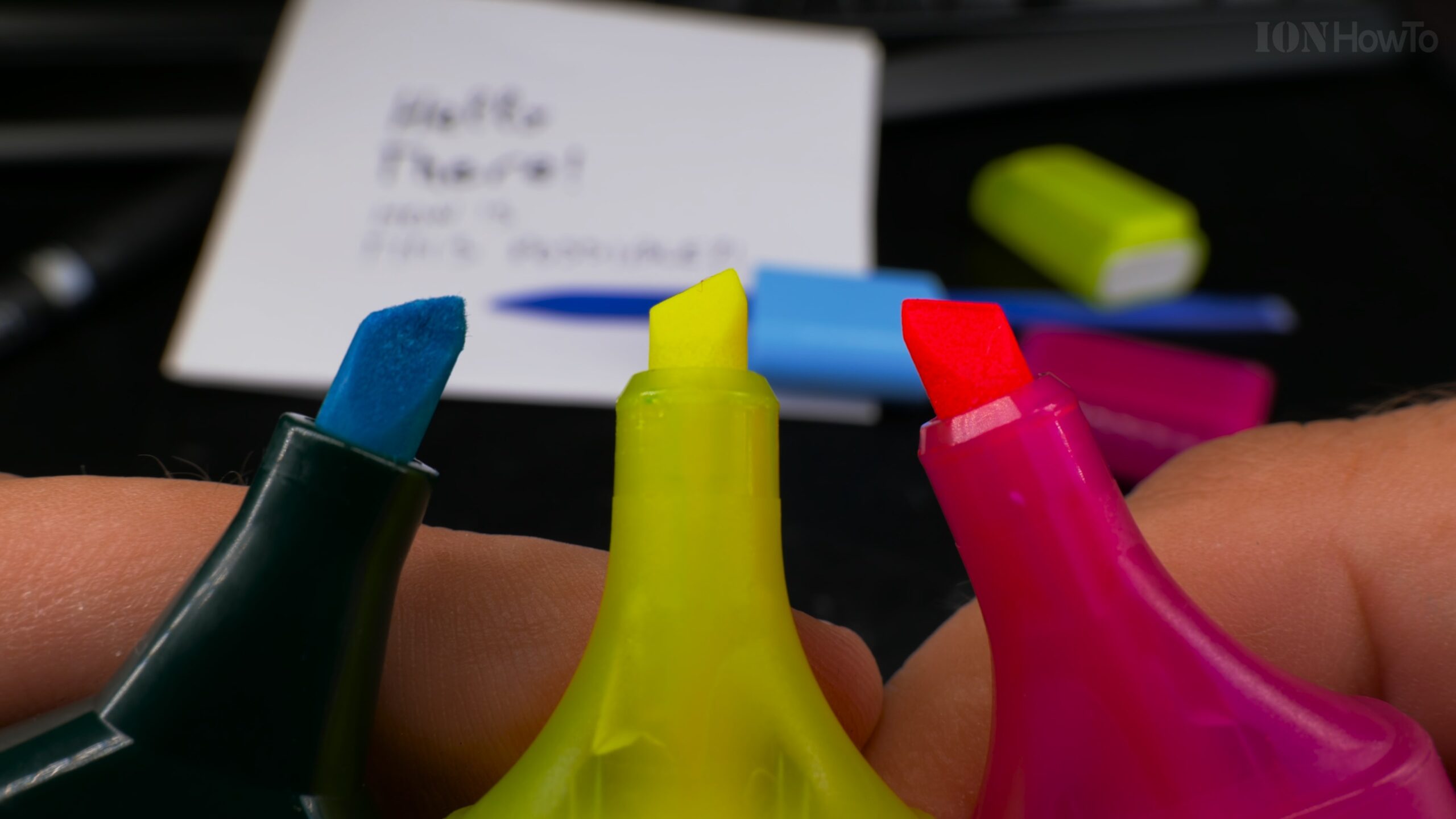
Dry Erase vs Permanent Markers: Differences Explained.
Learn how dry erase markers and permanent markers work differently and when to use each one. If you’ve ever accidentally used the wrong marker on a whiteboard, you already know why this matters.
I’ll show you the key differences between these two common marker types so you can pick the right tool for your project.
The Main Difference in Plain Terms
Dry erase markers – Made for whiteboards. The ink sits on top of the surface and wipes off easily with a dry cloth or sponge.
Permanent markers – Made to stay. The ink soaks into or bonds with the surface and resists normal cleaning.
On a whiteboard, both markers might look the same when you write. But when you try to wipe them off, the difference is huge.

How Each Marker Behaves
Dry erase markers:
- Wipe off completely with a dry tissue, cloth, or whiteboard eraser
- Can sometimes be removed with just your finger
- Leave no stain on smooth, non-porous surfaces
- May leave “ghosting” (faint leftover marks) on old or scratched boards
Permanent markers:
- Do not wipe off with a dry cloth
- Resist water and normal cleaning
- Require alcohol or special cleaners to remove
- Can stain many surfaces permanently
What Happens When You Use the Wrong Marker
Permanent marker on a whiteboard
This is the most common mistake. The marker seems to write fine, but then it won’t wipe off. Don’t panic – you can fix this. Here’s how:
- Get rubbing alcohol (70% or higher works best)
- Spray or dab it on the permanent marker marks
- Let it sit for a few seconds
- Wipe with a clean cloth or paper towel
- Repeat if needed
The alcohol breaks down the permanent ink so it can be wiped away.
Dry erase marker on a permanent surface
If you use a dry erase marker on paper, cardboard, or other porous surfaces, it won’t wipe off. Dry erase markers are only “erasable” on non-porous surfaces like whiteboards, glass, or smooth plastic. On paper, they act more like regular markers.
Why the Inks Behave Differently
Dry erase markers contain a special solvent that keeps the ink from bonding to smooth surfaces. The ink sits on top and dries into a thin film that can be wiped away.
Permanent markers use a different solvent (often alcohol-based) that evaporates quickly and leaves behind ink that bonds to most surfaces. Once dry, water won’t remove it – only solvents like alcohol can break it down.
Which Marker Should You Use?
Use dry erase markers for:
- Whiteboards and dry erase boards
- Temporary notes and reminders
- Classroom teaching
- Office brainstorming sessions
- Glass surfaces (temporarily)
Use permanent markers for:
- Labeling storage bins and boxes
- Writing on cardboard or paper
- Marking glass or plastic permanently
- Arts and crafts projects
- Anywhere you need the writing to last
A Note About Marker Tips
Both marker types come in different tip sizes:
- Fine tip – good for detailed writing and small labels
- Chisel tip – good for both thin and thick lines (hold vertically for thin, horizontally for thick)
- Bullet tip – good for general writing
The tip shape doesn’t change whether the marker is dry erase or permanent. Look at the label on the marker to know which type you have.
Can You Remove Permanent Marker from Other Surfaces?
Alcohol (70% or higher) works on many surfaces, but not all:
- Glass and smooth plastic – alcohol usually works well
- Whiteboards – alcohol works, but may damage an old board
- Wood – permanent marker may soak in and stay forever
- Paper and cardboard – no removal method works well
- Fabric – try rubbing alcohol, but it may not fully come out
Always test on a small hidden area first if you’re cleaning something valuable.
Why Old Whiteboards Are Harder to Clean
Over time, whiteboards develop tiny scratches. Dry erase ink can get stuck in these scratches and won’t wipe off completely. This is called “ghosting.” It looks like faint leftover marks.
If your board has ghosting:
- Clean it with whiteboard cleaner (not just a dry eraser)
- Try a magic eraser (gently – it can make scratches worse)
- Replace the board if it’s too worn
Step-by-Step Summary
For dry erase markers:
- Write on a smooth, non-porous surface
- Wipe with a dry cloth or whiteboard eraser
- Ink comes off completely
For permanent markers:
- Write on almost any surface
- Ink bonds and stays
- Remove only with alcohol or special cleaner
To fix permanent marker on a whiteboard:
- Get 70% or higher rubbing alcohol
- Apply to the mark
- Let it sit for a few seconds
- Wipe clean
- Repeat as needed
Final Tips
- Always check the label before using a marker on a whiteboard
- Keep a bottle of rubbing alcohol near your whiteboard just in case
- Old, scratched whiteboards are harder to clean – consider replacing them
- Dry erase markers work on glass too, which can be fun for temporary window notes
Thanks for reading. I hope this helps you choose the right marker for your next project.
Leave a Reply Cancel reply