


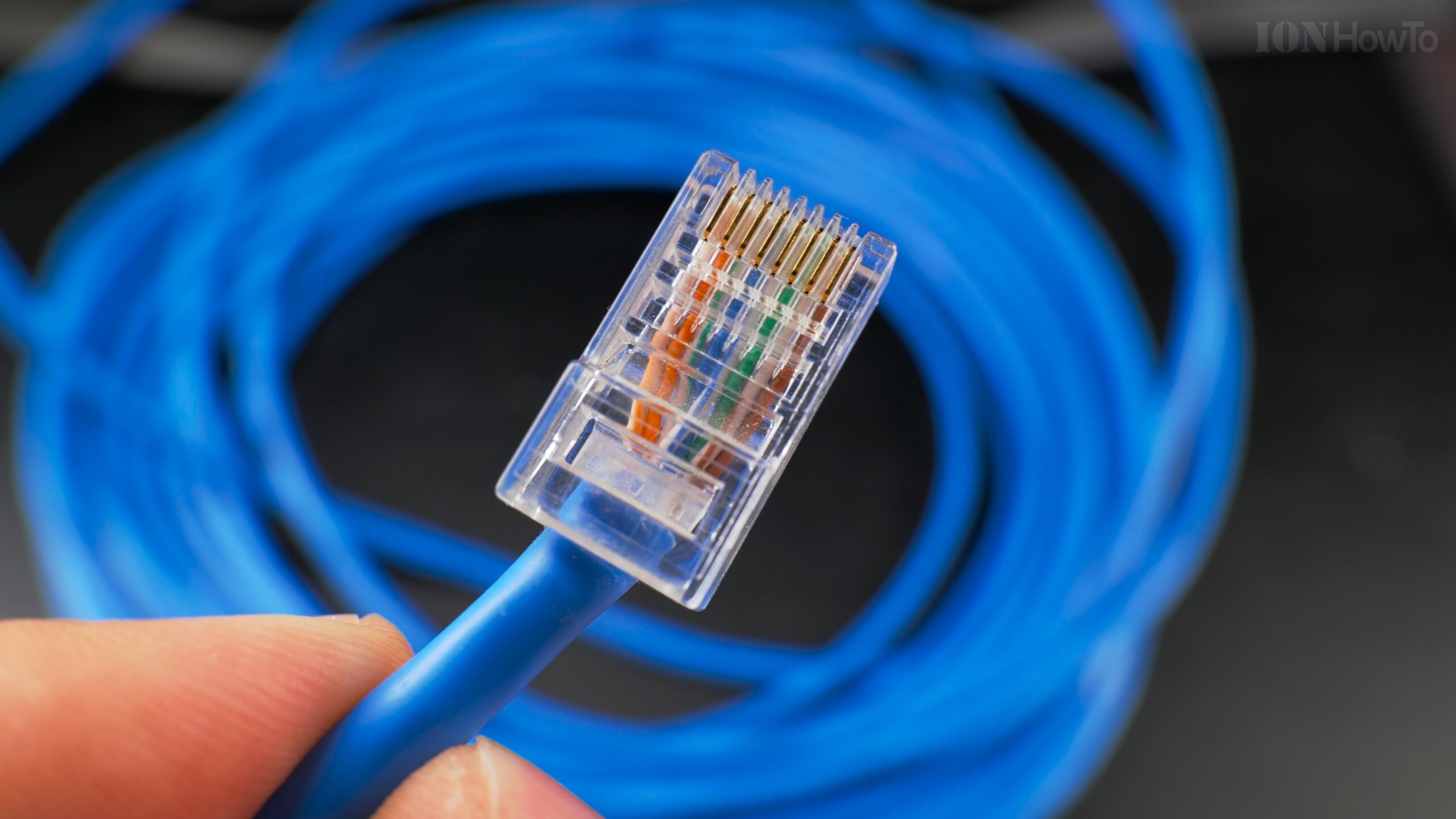
Pulling Ethernet Cable Through Conduit Using Fishing Tape
When Fishing Tape is Your Only Option
There comes a point in every network installation where you can’t use existing cables as pull cords. Maybe the conduit is empty, the old cable broke during removal, or you’re installing in new construction. That’s when fishing tape becomes your best friend—and sometimes your most frustrating challenge.
After pulling cables through everything from smooth PVC to corrugated flexible conduit, I’ve developed a systematic approach to using fishing tape that works in 95% of situations. Let me walk you through every detail, from choosing the right tape to recovering when things go wrong.
Pull New Ethernet Cable using Old Cable in Conduit Upgrade Cat5E to Cat6A.

Understanding Fishing Tape: More Than Just a Wire
Types of Fishing Tape
1. Steel Fish Tape (The Classic)
- Material: Spring steel, usually 1/4″ or 3/8″ wide
- Lengths: 25ft to 200ft
- Best for: Straight runs, metal conduit
- Pros: Stiff, can push through obstructions
- Cons: Can kink, conducts electricity
- My experience: Good for short runs, terrible for bends
2. Fiberglass Fish Rods
- Material: Fiberglass sections that screw together
- Lengths: Modular (typically 3-6ft sections)
- Best for: Long runs with bends, delicate environments
- Pros: Non-conductive, flexible, won’t kink
- Cons: Expensive, sections can unscrew
- My choice: For most home installations
3. Nylon Fish Tape
- Material: Flat nylon with steel core
- Lengths: 50ft to 200ft
- Best for: Packed conduit, tight spaces
- Pros: Flexible, won’t damage existing cables
- Cons: Can stretch, hard to push
- Special use: When conduit is nearly full
4. Glow Rods (My Favorite)
- Material: Flexible plastic/fiberglass, often glow-in-dark
- Lengths: 10-50ft sections
- Best for: Residential, attics, crawl spaces
- Pros: Easy to see, flexible, non-conductive
- Cons: Limited length, not for commercial
My Kit: I invested in 50ft of fiberglass rods ($120) and keep cheap steel tape as backup.
Ethernet Tester Device for Cat5E Cat6 and Cat6A Ethernet Cables.

Pre-Pull Assessment: The Critical First Step
Conduit Analysis Checklist
1. Conduit Type and Size
Measure:
- Inner diameter (critical!)
- Outer diameter
- Material (PVC, EMT, flexible)
- Age and condition
Common Home Conduit Sizes:
- 1/2″ EMT: 0.622″ ID (15.8mm) – Tight for Cat6A
- 3/4″ EMT: 0.824″ ID (20.9mm) – Comfortable
- 1/2″ PVC: 0.602″ ID (15.3mm) – Minimum for Cat6A
- 3/4″ PVC: 0.804″ ID (20.4mm) – Recommended
2. Route Mapping
What you need to know:
- Total length
- Number and angle of bends
- Vertical sections (up/down)
- Junction/access boxes
- Existing cables (type and count)
3. Obstruction Assessment
Check for:
- Debris (concrete dust, dirt)
- Old cable remnants
- Water or moisture
- Damaged sections
- Sharp edges at couplings
The 40% Fill Rule (Revisited for Fish Tape)
Maximum Safe Fill:
Calculate: (Cable diameter × 2) + Fish tape thickness ≤ 40% conduit ID

Example (3/4" PVC):
- Conduit ID: 20.4mm
- 40%: 8.16mm
- Cat6A: 7.0mm
- Fish tape: 3mm
- Total: 10mm → TOO TIGHT

Solution: Pull cables separately or use thinner tape
The Right Tools for the Job
Essential Fishing Toolkit
1. The Fish Tape Itself
- Length: 25% longer than conduit run
- Type: Match to conduit and obstacles
- Condition: Clean, straight, functional
2. Lubrication System
- Commercial: Polywater, Ideal Yellow 77
- Application: Spray bottle, injection system
- Quantity: 1 liter per 100ft of difficult pull
3. Pulling Accessories
Must have:
- Cable socks (distribute pull force)
- Swivels (prevent cable twisting)
- Duct tape (high quality)
- Wire pulling compound

Nice to have:
- Cable grip (mechanical puller)
- Come-along (for very difficult pulls)
- Conduit mouse (clears debris first)
4. Safety Equipment
- Electrical gloves: Class 00 (1,000V)
- Eye protection: Debris can fly out
- Knee pads: You’ll be kneeling
- Headlamp: Both hands free
- Communication: Phones or radios
Specialized Tools Worth Their Weight
Conduit Camera ($200-500 rental):
- When: Multiple failed attempts
- Benefit: See exactly what’s blocking
- Cost-benefit: Cheaper than damaging cables
Repair RJ45 Cat 6A Ethernet Cable.

Cable Lubrication Injector ($50-100):
- Forces lubricant deep into conduit
- Particularly useful for vertical runs
- Reduces pull force by 30-50%
Mechanical Puller ($150-300):
- For extremely difficult pulls
- Provides consistent force
- Prevents over-pulling
Step-by-Step Fishing Process
Phase 1: Preparation (40% of Success)
Step 1: Clear the Conduit
Method 1: Air Pressure
- Use shop vac in reverse
- Compressed air (careful with debris)
- Conduit cleaning brush

Method 2: Mechanical
- Conduit mandrel (size appropriately)
- Old cable with brush attached
- Professional cleaning service
Step 2: Apply Lubricant in Advance
- Spray 1 meter into entrance
- If possible, lubricate from other end
- Let sit 10 minutes
Step 3: Prepare Fish Tape
For fiberglass rods:
1. Connect first section
2. Apply lubricant to tip
3. Attage retrieval line (if needed)
4. Check all connections are tight

For steel tape:
1. Unroll completely
2. Straighten first 10 feet
3. Apply lubricant
4. Form smooth leading edge
Step 4: Set Up Work Area
- Clear path for cable feeding
- Organize tools within reach
- Establish communication protocol
- Designate safe zones
Phase 2: Insertion and Navigation (The Art)
Technique 1: The Straight Push (Simple Runs)
Procedure:
1. Hold tape 6 inches from tip
2. Align with conduit center
3. Push steadily, don't force
4. Rotate tape slightly as you push
5. Feel for resistance changes
Technique 2: Bend Navigation (Complex Runs)
The Challenge: Tape wants to go straight
Solution:
1. Pre-bend tape before entering conduit
2. Push until you feel bend resistance
3. Pull back 6 inches
4. Rotate tape 90-180 degrees
5. Push again with slight wiggle
6. Repeat until past bend
Technique 3: The “Two-Person Feed” (Long Runs)
Person 1: Pushes tape into conduit
Person 2: Feeds tape from reel
Key: Keep slight tension, prevent kinks
Communication: "Feeding," "Slowing," "Stopped"
Technique 4: Using Gravity (Vertical Runs)
Downward: Let weight help, control descent
Upward: May need weighted tip
Pro tip: Add small weight to tape end
Common Insertion Problems and Solutions
Problem: Tape Won’t Enter Conduit
Cause: Burr or obstruction at entrance
Solution:
1. File entrance smooth
2. Use smaller tape
3. Insert flexible leader first
4. Try from other end
Problem: Tape Gets Stuck at First Bend
Cause: Too stiff for bend radius
Solution:
1. Switch to more flexible tape
2. Use fiberglass rods
3. Pull back, rotate, try different angle
4. Consider conduit liner for bend
Problem: Tape Progress Slows Then Stops
Cause: Debris accumulation or tight spot
Solution:
1. Pull back 1 foot
2. Apply more lubricant
3. Try gentle rotation while pushing
4. If no progress, abandon and clear conduit
Phase 3: Retrieval at Other End
The Moment of Truth:
Goal: Get tape end accessible
Methods:
1. Visual: Can you see it?
2. Sound: Listen for tape hitting end
3. Feel: Vibration when tape hits end
4. Measurement: Should match conduit length
When You Can’t Reach the Tape:
Situation: Tape is close but not accessible
Solution 1: Magnet retrieval (steel tape only)
Solution 2: Hook tool through knockout
Solution 3: Flexible grabber tool
Solution 4: Vacuum with string method
The Vacuum Method (When All Else Fails):
1. Attach lightweight string to plastic bag
2. Place bag over conduit entrance
3. Use shop vac on other end
4. Bag (with string) gets pulled through
5. Use string to pull pull rope
6. Use rope to pull tape
Phase 4: Attaching and Preparing for Pull
The Critical Connection:
Rules:
1. Strong enough for pull force
2. Smooth to avoid snagging
3. Small enough for conduit clearance
4. Secure enough not to detach
Attachment Method 1: The “Tape Sock”
Materials: Cable pulling grip, electrical tape
Steps:
1. Insert fish tape into grip
2. Tighten grip
3. Tape over grip for smoothness
4. Test connection strength
Attachment Method 2: The “Chinese Finger Trap”
For attaching pull rope to tape:
1. Double back fish tape 6 inches
2. Tape securely
3. Attach pull rope to loop
4. Tape entire assembly smoothly
Attachment Method 3: Swivel Connection
When pulling multiple cables:
1. Fish tape → Swivel → Pull rope
2. Pull rope → Swivel → Cable grip
3. Prevents twisting damage
Size Check (CRITICAL):
Before pulling: Test fit in conduit
1. Attach everything
2. Try to insert into conduit entrance
3. Should go in easily
4. If tight, make more streamlined
Phase 5: The Actual Pull
Communication Protocol:
Standard calls:
Feeder: "Ready to feed"
Puller: "Ready to pull"
Feeder: "Feeding now"
Puller: "Pulling steady"
During: "Resistance increasing," "Coming through bend," etc.
Emergency: "STOP" (immediate cessation)
Puller’s Responsibilities:
- Apply steady force (no jerking)
- Monitor pull force (spring scale)
- Communicate constantly
- Stop immediately if problems
Feeder’s Responsibilities:
- Keep cable organized (figure-8 pattern)
- Apply lubricant continuously
- Guide into conduit smoothly
- Prevent kinks and twists
Force Monitoring Guidelines:
Maximum safe forces:
- Cat5e: 25 lbs (110N)
- Cat6A: 30 lbs (133N)
- Cat6A with pulling grip: 40 lbs (178N)
- Pull rope: Check manufacturer rating

My typical progression:
- Start: 5-8 lbs
- Through first bend: 10-15 lbs
- Maximum (vertical section): 22 lbs
- Average: 12-18 lbs
Lubrication During Pull:
Frequency:
- Every 5 feet for difficult pulls
- Every 10 feet for moderate
- Continuous for vertical sections

Application:
- Spray on cable ahead of entrance
- Don't lubricate already-in-conduit section
- Reapply when resistance increases
Phase 6: Dealing with Problems During Pull
Problem: Sudden Increase in Resistance
Immediate action: STOP
Possible causes:
1. Cable snagged on obstruction
2. Conduit damage
3. Over-tight bend
4. Lubrication dried out

Diagnosis:
1. Can you pull back slightly?
2. Does resistance decrease when pulling back?
3. Can you feel vibration when tapping conduit?
Problem: Cable Stops Moving Entirely
Cat 6A vs Cat 7 Ethernet Cable.

DO NOT increase force beyond safe limit
Step 1: Attempt gentle back-and-forth
Step 2: Apply lubricant to stuck point (if possible)
Step 3: Consider pulling from other direction
Step 4: May need to abandon and cut cable
Problem: Cable Jacket Shows Damage
Signs: White stress marks, cuts, abrasions
Action: Stop immediately
Assessment: Can you repair with junction?
Options:
1. Pull back to damage point
2. Install junction box
3. Pull new section
4. Accept reduced performance (not recommended)
Phase 7: Completion and Post-Pull
Step-by-step Replace Ethernet Cable Pull New Cable with Old Cable in Conduit Upgrade Cat5E to Cat6A.

Final Feet Protocol:
Last 3 feet are critical:
1. Slow down significantly
2. Guide cable out gently
3. Prevent kinking at exit
4. Secure immediately
Ethernet Tester Device for Cat5E Cat6 and Cat6A Ethernet Cables.
Immediate Post-Pull Actions:
- Inspect entire length for damage
- Test continuity (all 8 conductors + shield)
- Measure actual length pulled
- Label both ends immediately
- Document pull details
Leaving Pull Capacity:
ALWAYS leave:
1. Pull rope in conduit (bright color)
2. Documentation of what's there
3. Notes on any difficulties encountered
Repair RJ45 Cat 6A Ethernet Cable
Advanced Techniques for Extreme Situations
The “Push-Pull” Method for Tight Conduit
When: Conduit is near capacity
Setup:
End A: Person with fish tape pushing
End B: Person pulling gently
Middle: Lubrication injection points
Advantage: Reduces friction by distributing force
Segmented Pulling for Long Runs
When: Over 50 meters or multiple bends
Strategy:
- Pull rope through entire length
- Pull first cable to midpoint
- Temporarily secure at midpoint
- Pull from midpoint to end
- Splice if necessary (not ideal for data)
Using Conduit Liners for Damaged Runs
Situation: Conduit has sharp edges or damage
Solution:
- Pull split conduit liner through first
- Install liner (snaps together)
- Pull cables through liner
- Protects cables from damage
Specific Scenarios and Solutions
Scenario 1: Empty Conduit with Multiple Bends
My Most Challenging Pull:
- Length: 35 meters
- Bends: 6 x 90°, 2 x 45°
- Conduit: 3/4″ PVC, 10 years old
- Challenge: Tape kept getting stuck at 4th bend
Solution That Worked:
- Used fiberglass rods (steel tape failed)
- Added weight to tip (small fishing sinker)
- Injected lubricant at each access point
- Two-person feed with rotation
- Success on 3rd attempt
Scenario 2: Conduit with Existing Cables
Situation: Need to add Cat6A to conduit with 2 existing Cat5e
Approach:
- Used nylon fish tape (less likely to damage existing)
- Taped end thoroughly (no sharp edges)
- Pulled pull rope first
- Used rope to pull cable
- Monitored existing cables for damage
Scenario 3: Vertical Run Through Multiple Floors
Problem: 4-story vertical conduit, existing cables present
Solution:
- Weighted tape dropped from top
- Vacuum assist from bottom
- Used cable socks on all cables
- Pulled all cables together (balanced weight)
- Secured at each floor during pull
Troubleshooting: When Fishing Fails
Diagnostic Flowchart for Failed Attempts
Attempt 1: Tape won't go past first bend
     ↓
Try: More flexible tape, better lubrication
     ↓
Still stuck? → Check for obstruction with camera
     ↓
Obstruction found → Clear or abandon
     ↓
No obstruction → Try from other end
Common Failure Modes
Failure 1: Tape Kinks or Breaks
Cause: Too much force, poor quality tape
Prevention: Use appropriate tape, don't force
Recovery: May need to retrieve broken tape first
Failure 2: Tape and Cable Separate During Pull
Cause: Poor attachment
Prevention: Test connection before pull
Recovery: Pray you can retrieve both ends
Failure 3: Cable Damaged During Pull
Cause: Sharp edges, excessive force
Prevention: Proper conduit preparation
Recovery: May need to abandon and use different route
Safety Considerations
Electrical Safety
Assume all conduits contain live wires until proven otherwise
- Test with voltage detector
- Use non-conductive tools
- Wear appropriate PPE
- Work with power off when possible
Physical Safety
Common Injuries and Prevention:
- Eye injuries: Wear safety glasses always
- Hand cuts: Gloves, watch for sharp edges
- Back strain: Proper lifting technique
- Falls: Secure ladders, clear work area
Economic Analysis: DIY vs Professional
Cost Breakdown
My 35m Complex Pull:
DIY Costs:
- Fish tape: $120 (one-time investment)
- Lubricant: $25
- Cable: $65
- Connectors: $12
- Time: 8 hours
- Total: $222 + my time

Professional Quote:
- Labor: $600 (8 hours @ $75/hr)
- Materials: $150
- Total: $750

Savings: $528
Effective hourly rate: $66/hour
When to Call a Professional
Consider professional help when:
- Multiple failed attempts
- Safety concerns (height, electricity)
- Time constraints (need it done now)
- Warranty requirements
- Extreme difficulty (known obstructions)
Documentation and Future-Proofing
Creating a Conduit Map
What to Document:
For each conduit:
1. Location (from-to)
2. Length
3. Diameter and material
4. Number and angle of bends
5. Existing cables (type, count, age)
6. Pull difficulty rating (1-5)
7. Photos of both ends
8. Notes on any issues
Leaving a Legacy for the Next Person
In the Conduit:
- Brightly colored pull rope
- Labeled with date and installer
In Documentation:
- Detailed notes
- Photos
- Recommendations for next pull
Lessons Learned from Experience
What I Wish I Knew Sooner
- Buy quality tape once (cheap tools cost more in time)
- Lubricant is not optional (it’s insurance)
- Two people are mandatory for anything complex
- Patience beats force every time
- Document as you go (memory fades)
My Biggest Mistakes and Recoveries
Mistake 1: Using steel tape in flexible conduit
- Result: Tape kinked, stuck, abandoned
- Recovery: Had to cut conduit to retrieve
- Lesson: Match tape to conduit type
Mistake 2: Insufficient lubrication
- Result: Cable stuck at 25 meters
- Recovery: 3 hours of back-and-forth
- Lesson: Apply liberally and often
Mistake 3: Poor attachment
- Result: Cable detached during pull
- Recovery: Fortunately near end
- Lesson: Test, test, test the connection
The Future of Cable Pulling
Emerging Technologies
1. Conduit Robots:
- Camera-equipped, self-propelled
- Can place pull rope
- Still expensive ($5,000+)
2. Air-Assisted Pulling:
- Uses compressed air to push cables
- Limited to certain cable types
- Becoming more affordable
3. Smart Fishing Systems:
- GPS tracking of tape position
- Force sensors throughout
- Data logging for analysis
Planning for Your Next Pull
In 5-10 Years: You’ll likely pull fiber
Consider: Oversizing conduit now
Documentation: Will be invaluable later
The Ultimate Success Metric
A successful cable pull isn’t just about getting from A to B. It’s about:
- Cable integrity: No damage, full performance
- Future accessibility: Pull rope left in place
- Documentation: Next person can succeed
- Learning: You’re better prepared for next time
Fishing cable through conduit is equal parts skill, patience, and preparation. With the right tools, techniques, and mindset, you can tackle even the most challenging pulls. Remember: Every conduit has a story, and every successful pull adds to yours.
The difference between a nightmare pull and a smooth installation often comes down to preparation. Invest time in understanding your conduit, choose the right tools, and never underestimate the power of good lubrication. Your future self (and anyone who works on the installation after you) will thank you.
Leave a Reply Cancel reply