
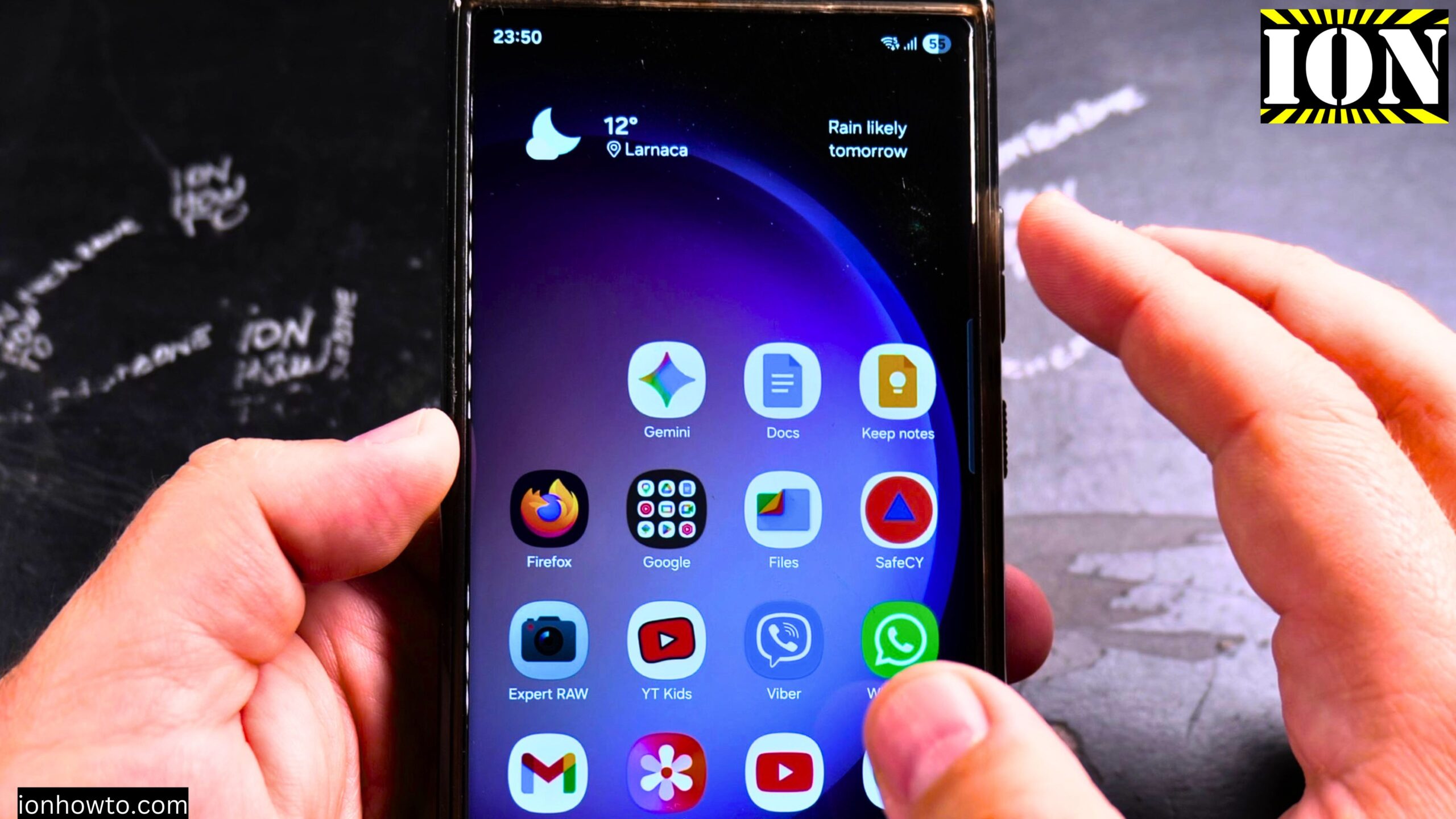
How to Fix Samsung Screen Auto Rotate Missing or Stuck in Portrait Mode.
Learn how to fix your Samsung phone when the auto rotate button is missing or harder to find and your screen gets stuck in portrait mode. I’ll show you the steps to troubleshoot and restore screen rotation on your device.
I am showing you on a Samsung S23 Ultra running Android 15 with One UI 7.0. The same steps work on other Samsung Galaxy devices with One UI 7.
In this post, I show you how to check if auto rotate is enabled in your quick settings panel. If the rotation icon disappeared from your notification shade, I explain how to add it back. Learn why your Samsung screen won’t rotate or how to unlock screen rotation when it is stuck.
The Problem with Auto Rotate in One UI 7
After updating to One UI 7, you might notice something different. The auto rotate button is not missing exactly. It is still there. But Samsung decided to rename it and change how it looks. This makes it much harder to find.
The issue is not that your phone’s sensors are broken. Your phone is likely set to portrait mode and you cannot find the button that enables auto rotate. This is a simple software confusion, not a hardware problem.
Where Did the Auto Rotate Button Go
In older versions of One UI, the quick settings panel had a button that said “Auto rotate” or showed a rotate icon. When it was off, the icon looked one way. When it was on, it looked another way. It was easy to understand.
In One UI 7, Samsung changed this button. Instead of saying “Auto rotate” or showing a rotate symbol, the button now says “Portrait” when rotation is locked. It changes the text based on what mode you are in. This is very confusing the first time you look for it.
How to Find the Auto Rotate Setting in One UI 7
Here is exactly how to find and change the rotation setting:
- Swipe down from the top of your screen to open the notification panel and quick settings
- Look at the quick settings buttons (the icons at the top of the panel)
- Find a button that says “Portrait”
- Tap that button
That is it. The button that used to say “Auto rotate” now says “Portrait” when rotation is locked. Tapping it will change the setting.
What Happens When You Tap the Portrait Button
- Tap once: The button changes from “Portrait” to “Auto rotate”
- Your screen will now rotate automatically when you turn your phone
- To lock rotation again, tap the button again and it changes back to “Portrait”
What If You Cannot Find the Portrait Button
If you have customized your quick settings panel, the Portrait button might not be visible. You may have removed it by accident. Here is how to add it back:
- Swipe down from the top of your screen to open the quick settings panel
- Tap the pencil icon or the edit button (usually at the top or bottom of the panel)
- Look through the list of available buttons
- Find the button called “Portrait” or “Auto rotate”
- Drag it into your active quick settings panel
- Tap done or save
Once you add it back, you can use it to control screen rotation.
How to Test If Auto Rotate Is Working
The easiest way to test auto rotate is with the YouTube app. Here is how:
- Open the YouTube app
- Play any video
- Turn your phone sideways (horizontally)
- If auto rotate is on, the video will fill the screen in landscape mode
- If auto rotate is off, the video will stay in portrait mode
You can also test with any other app that supports landscape mode. Many apps like Chrome, Photos, and Maps will rotate when you turn your phone.
The Manual Rotate Button Option
Even if you keep auto rotate turned off, One UI 7 still gives you a way to rotate the screen manually. Here is how it works:
- Turn your phone sideways while auto rotate is off
- Look at the bottom right corner of your screen
- You will see a small rotate icon appear
- Tap that icon to rotate the current screen
- The icon disappears after a few seconds if you do not tap it
This is useful if you mostly keep your phone in portrait mode but occasionally want to rotate for a specific video or website. You do not have to turn auto rotate on and off all the time.
Why Samsung Changed This
It is not entirely clear why Samsung renamed the rotate button. Some people think it makes the setting more clear. When rotation is locked, it says “Portrait” which tells you exactly what mode you are in. When rotation is on, it says “Auto rotate” which tells you the screen will move on its own.
The problem is that longtime Samsung users expect to see an icon or the words “Auto rotate.” Seeing “Portrait” instead makes you think the button is missing. You might scroll through your quick settings several times looking for something that is right in front of you.
What If Your Screen Really Is Stuck
If you have found the Portrait button and tapped it to enable auto rotate but your screen still does not rotate, try these steps:
- Restart your phone (hold the power button and tap restart)
- Check if the app you are using supports landscape mode (some apps do not)
- Test with the YouTube app as described above
- Make sure you are actually turning your phone sideways, not just tilting it slightly
If none of these work, there might be a hardware issue with your phone’s accelerometer or gyroscope sensors. In that case, you may need to take your phone to a repair center.
Does This Affect Both Quick Settings Panels
In One UI 7, you can choose to have the notification panel and quick settings panel separate or combined. This setting does not matter for the rotate button. The Portrait button works the same either way. You will find it in the quick settings area regardless of which layout you prefer.
Final Thoughts
Learn how to fix your Samsung screen rotation by finding the renamed button in One UI 7. The auto rotate setting is not missing. It is just called “Portrait” now when rotation is locked. Swipe down, look for the Portrait button in your quick settings, and tap it to enable auto rotate.
If you want to keep auto rotate off, you can still manually rotate any screen by turning your phone sideways and tapping the small rotate icon that appears in the corner.
Let me know in the comments if this helped you find the rotation setting on your Samsung phone. Was it easy to find or did it confuse you too?


Leave a Reply