
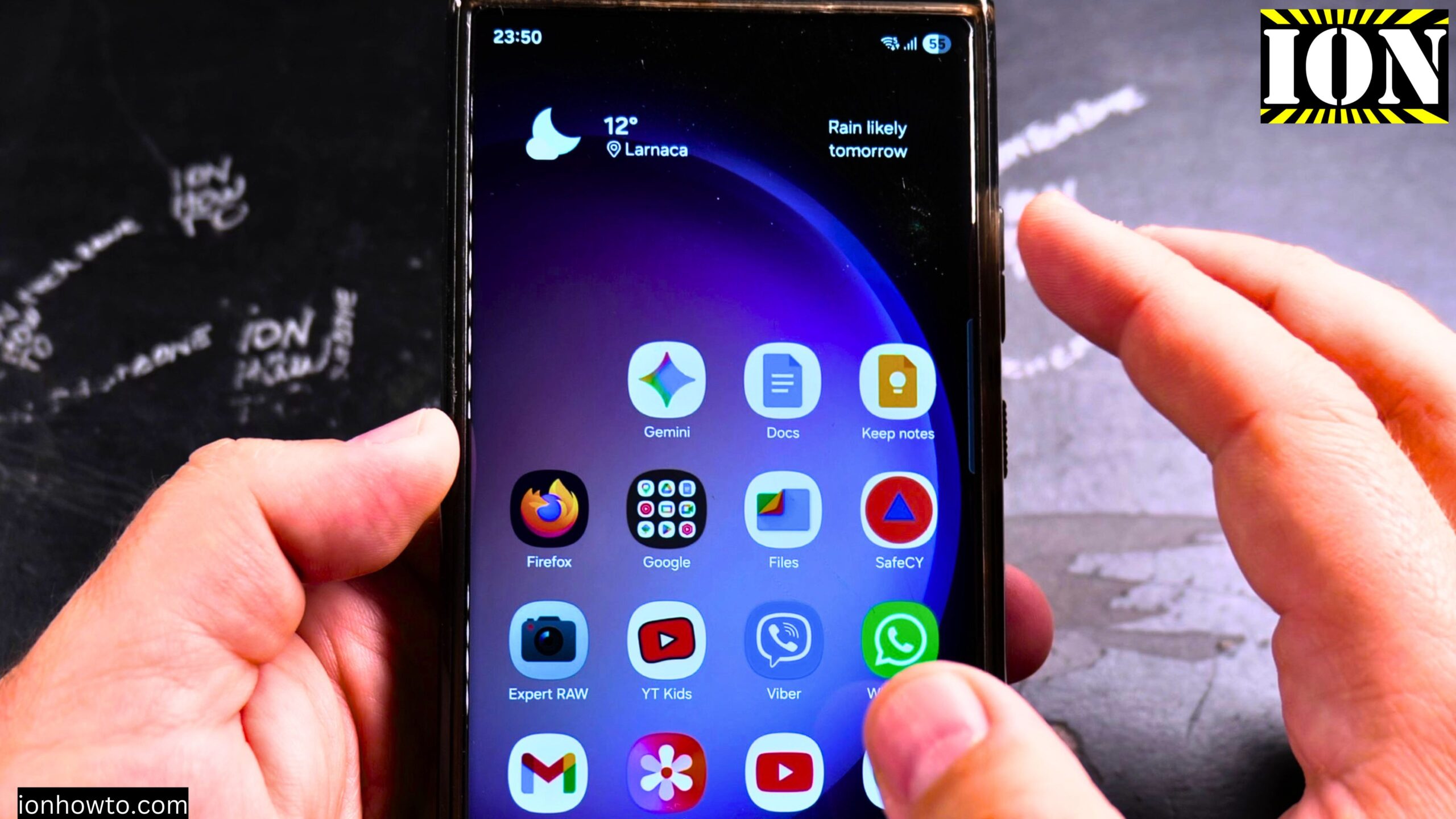
How to Add a Weather Widget to Your Samsung Home Screen.
Learn how to add a weather widget to your Samsung phone’s home screen. I’ll show you the steps to place a weather forecast widget on your main screen or any home screen page.
I am showing you on a Samsung S23 Ultra running Android 15 with One UI 7.0. The steps work on most Samsung Galaxy models including the S series, A series, and Z series running One UI. These steps work on Samsung devices running One UI 3 through One UI 7.
Why Add a Weather Widget
A weather widget lets you see the forecast at a glance without opening any app. You can check the temperature, conditions, and forecast right from your home screen. It is a quick and useful way to stay informed about the weather.
How to Add a Weather Widget
There are two easy ways to add a weather widget to your home screen. I will show you both.
Method 1: Using a Long Press
- Go to your home screen
- Find an empty area (not on top of any app icon)
- Press and hold your finger on that empty area (long press)
- A menu will appear at the bottom of the screen
- Tap on “Widgets”
- Scroll through the list or search for “Weather”
- You will see several weather widget styles and sizes
- Press and hold the widget style you want
- Drag it to where you want it on your home screen
- Release your finger to place the widget
Method 2: Using a Pinch Gesture
- Go to your home screen
- Pinch your fingers together on an empty area (like you are zooming out)
- This shows the same menu as the long press method
- Tap on “Widgets”
- Find and drag your weather widget as described above
Both methods work the same way. Use whichever feels more natural to you.
What Weather Widget Styles Are Available
Samsung offers several different weather widget styles. Here are the common ones:
- Weather and time – Shows the current temperature, conditions, and a clock
- Weather and forecast – Shows current temperature plus a short forecast for the next few hours
- Weather only – Just the temperature and conditions, no clock
- Different sizes – Some widgets are square, some are rectangular, some are large and detailed
You can try different styles to see which one you like best. If you do not like one, you can remove it and try another.
How to Resize Your Weather Widget
Not all widgets can be resized, but weather widgets usually can. Here is how:
- Press and hold the weather widget on your home screen
- Look for the resize handles (small dots or bars on the edges of the widget)
- Drag the handles inward or outward to make the widget smaller or larger
- Release when you are happy with the size
A larger widget shows more information like hourly forecasts. A smaller widget shows just the basics.
How to Move Your Weather Widget
Moving a widget is just like moving an app icon:
- Press and hold the weather widget
- Keep holding until the widget lifts up
- Drag it to a new spot on your home screen
- Release your finger to drop it in place
You can move widgets to different home screen pages by dragging them to the left or right edge of the screen.
How to Change Weather Widget Settings
After you add the widget, you can customize it. Here is how:
- Press and hold the weather widget
- Tap on “Settings”
- From here you can change:
- Location (GPS or a specific city)
- Temperature units (Celsius or Fahrenheit)
- Background (on, off, or transparent)
- Color scheme (light or dark)
Do not forget to tap “Save” if your settings have a save button. Some versions save automatically.
How to Use Widget Stacks
Samsung lets you stack multiple widgets in the same space. This is useful if you want a weather widget and a calendar widget in the same spot. You can swipe up or down on the stack to switch between widgets.
Here is how to create a stack:
- Add your first weather widget to the home screen
- Drag a second widget (like a calendar widget) directly on top of the first widget
- They will automatically form a stack
- Swipe up or down on the stack to switch between widgets
To edit a stack, press and hold on the stack and tap on the settings option.
What If You Cannot Find the Weather Widget
If you follow the steps and do not see weather widgets in the widget list, try these things:
- Make sure the Weather app is installed on your phone
- Check that the Weather app is not disabled
- Update the Weather app from the Galaxy Store
- Restart your phone and try again
The Weather app comes preinstalled on all Samsung phones. It should be there. If it is missing, you may have accidentally disabled it. Check in Settings > Apps for Weather and enable it if needed.
How to Remove a Weather Widget
If you decide you no longer want the widget:
- Press and hold the weather widget
- Tap “Remove”
- Confirm if asked
Removing the widget does not delete the Weather app. You can always add the widget back later.
How to Set Your Default Location
By default, the weather widget uses your GPS location. This means it will show weather for wherever you are. If you want to see weather for a specific city instead:
- Press and hold the weather widget
- Tap on “Settings”
- Tap on “Location”
- Turn off GPS or current location
- Search for and select a specific city
- Save your changes
The widget will now show weather for that city instead of following you around.
Final Thoughts
Learn how to add a weather widget to your Samsung home screen by long pressing an empty area, tapping Widgets, finding Weather, and dragging your chosen style onto the screen.
You can resize the widget, move it anywhere, change its settings, or stack it with other widgets. There are multiple styles to choose from, so pick the one that gives you the information you want at a glance.
Thanks for watching. I hope this helps you get a weather widget on your Samsung home screen.


Leave a Reply