
Why Did My Philips Eye Comfort LED Bulb Fail? A Teardown.
Learn what happened when a Philips LED Eye Comfort filament bulb stopped working. The bulb started with a flicker that got worse until it only gave off a dim glow. I opened it up to see what might have caused the failure.
What Happened to the Bulb?
This Philips LED bulb was rated at 17.5W with a warm white, 2700K color temperature. After some time, it began to flicker intermittently. The flickering became more frequent and severe until the bulb would no longer turn on properly, emitting only a very faint, dim light.
A notable detail: when the light switch was turned off, this dim glow would fade away slowly. This often suggests that the internal capacitors are still holding and releasing a charge, which might mean they are not the primary cause of the failure.
Inside the Bulb: A Look at the Electronics
Carefully opening the glass bulb revealed the driver circuit packed into the standard E27 socket. Visually, most components looked intact.
- Capacitors: The electrolytic capacitors showed no signs of bulging or leaking, which are common failure points.
- Inductor: One component, the inductor (a coiled wire), looked a bit damp or “juicy,” but it wasn’t clearly burned.
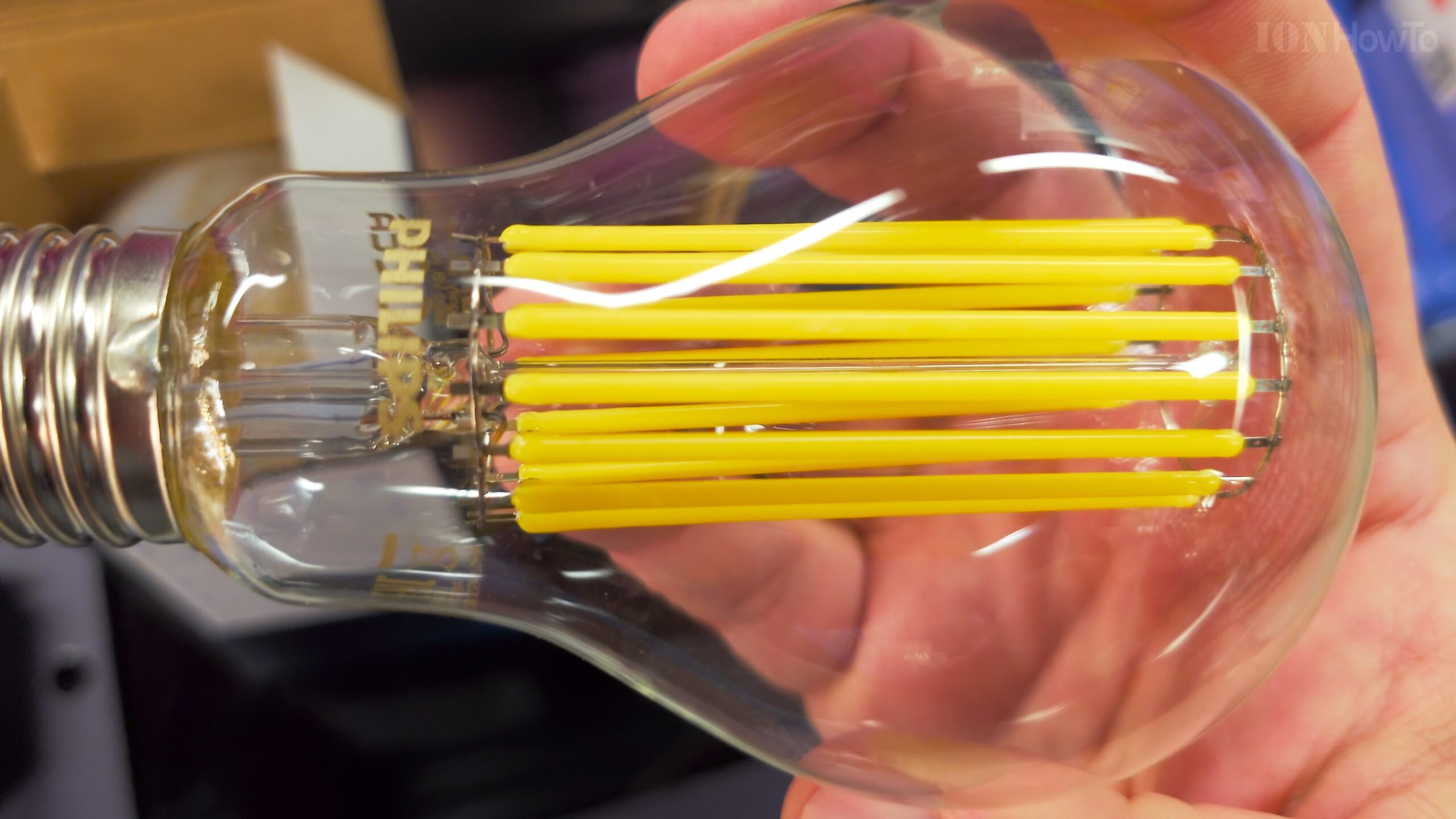
- The LED Filaments: The actual LED filaments inside the glass globe are what produce the light. They are all wired together in a series circuit.
The Most Likely Cause of Failure
Based on the teardown, the probable failure point is the LED filaments themselves.
Here’s a likely scenario of what happened:
- One filament fails. In a series circuit, all components share the same current. If one LED filament degrades or burns out, it breaks the circuit for all of them.
- Intermittent connection. As it begins to fail, the bad filament might make and break contact, causing the entire bulb to flicker.
- Complete failure. Once the filament fails completely, the circuit is broken. This explains why the bulb eventually stopped lighting up normally. The faint glow could be caused by residual current or a partial short within the damaged filament.
The fact that Philips may no longer sell this specific high-power (17.5W) filament model in some regions could suggest these bulbs were pushed near their limits. Powering the filaments at this level for a long time might lead to shorter lifespans due to the stress on the LEDs.
Is It Safe That It Failed This Way?
Yes. The bulb failed in a safe manner. It didn’t smoke, make noise, or damage the light fixture. The electronics are designed to prevent dangerous failures. The gradual flickering was a sign of the problem developing, giving you time to replace it.
How to Choose a Replacement
If you’re looking for a new bulb, Philips offers several lines. You can often find models with similar brightness and the familiar filament look.
Final Thought: While LED bulbs last much longer than old incandescent bulbs, they can still fail. A common cause in filament-style LEDs is the failure of a single LED strip inside the glass, which breaks the circuit for the whole bulb. Choosing a reputable brand and a model not operating at the very high end of its power range might lead to a longer life.


Leave a Reply